
Studio Dokola Studio Visit: Glassblower Billy Crellin on Material, Process and Contemporary Glass
Date
February 4, 2026

Project overview
'Meet The Melbourne Glass Artist Creating Must-Have Pieces'
.webp)
.webp)
.webp)
.webp)
.webp)
.webp)
.webp)
.webp)
.webp)
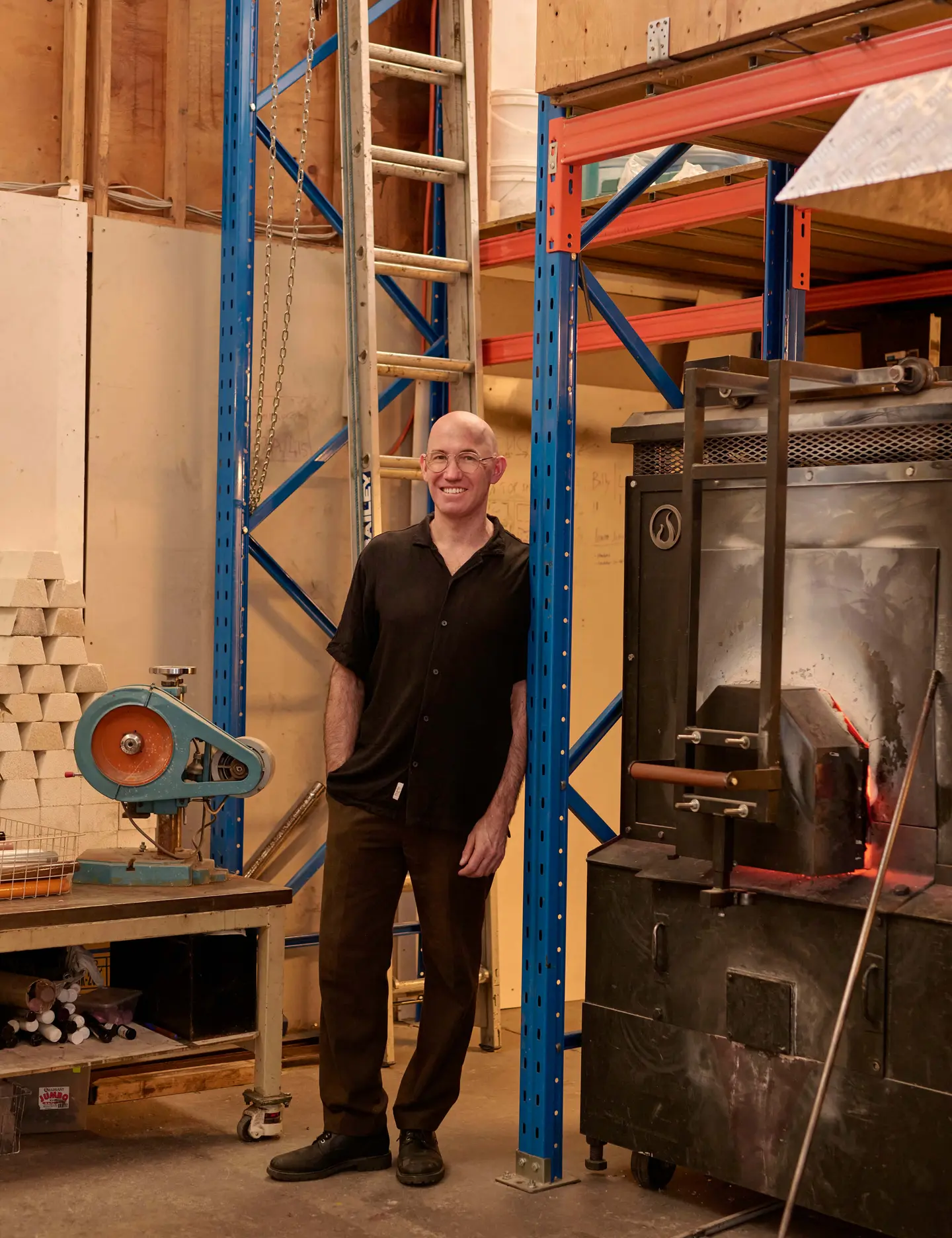
Originally featured as part of a studio visit with The Design Files, this interview with Melbourne glassblower Billy Crellin offers insight into the thinking behind Studio Dokola — a West Footscray-based glassblowing studio working across contemporary lighting, sculpture and functional objects.
Working between art, design and craft, Billy’s practice explores the material history of glass — from its origins as an imitation of precious stones to its evolving role in contemporary culture. Alongside producing commercial and sculptural work, Studio Dokola supports a growing community through public glassblowing classes and collaborative projects.
Billy sat down with The Design Files writer Amelia Barnes for this conversation:
Could you briefly outline your artistic background, and how this brought you to glassblowing?
I came to creativity working somewhat haphazardly across photography, sound and installation. I first encountered glass through its potential as a sonic material, but quickly became drawn to its immediacy and physicality.
After graduating, I moved to Europe and spent several years working across Germany, Denmark and the Czech Republic, refining my skills in hot glass. That period grounded my practice in both traditional technique and experimental thinking.
Did you study at University? If so, what did you study? How did you learn your craft?
I studied Visual Arts at Sydney College of the Arts, graduating with honours in 2012. My education was multidisciplinary, but glass became my primary material through hands-on studio access.
The craft itself was learned over time through a combination of university facilities, international studio work, and learning directly from other makers — very much an apprenticeship-style process.
Is this what you do full time? If not, what else do you do?
Yes — I run Studio Dokola full time. It supports a host of grassroots practitioners working in hot glass.
My practice is split between making my own work, producing functional and commercial pieces, and running public glassblowing classes. Teaching has become a significant part of the studio — both as a way to sustain the business and to build a broader community around the material.
Your style is very distinctive — how would you describe your work and what was your inspiration/vision?
My work sits between historical reference and material speculation. I’m interested in glass as a material that was once used to imitate precious stones, and how its value and meaning has shifted over time.
At its core, I’m interested in how the glass I use came to be, and where its material life might go next. The forms often reference early glassmaking techniques or natural processes — molten, geological, or eroded states — while questioning what glass might become in the future.
Has your style always been as such? How has it evolved?
Not at all. Earlier work was more rooted in installation and sound-based outcomes. Over time, the focus has shifted toward the object itself — its surface, weight and presence.
Fundamentally, glassblowing — like many crafts — is traditionally learned through mimicry. Returning to a more naive, early-career sensibility has allowed me to break from that model and rebuild the practice as a conceptual artistic language.
Glassblowing is a fast-paced craft! How do you find your days in the studio? How often does something ‘go wrong’ and what happens when it does?
The pace is part of what defines it — you’re constantly responding to molten material in real time, working against timing, cooling and gravity.
Things go wrong regularly, but that’s built into the process. Sometimes it’s a technical failure, other times it leads to a new idea. You learn to adapt quickly, and occasionally those ‘mistakes’ become the most interesting outcomes.
There’s also a big difference between artistic and production work — in the studio, we often deliberately slow things down to explore the material more deeply.
How many pieces would you make in a day in the studio?
It depends on the type of work. For production pieces, we might make 20–40 smaller items in a day as a team of three.
For more complex or sculptural works, it might only be a few pieces — or even just one. While the act of making is immediate, a lot of unseen preparation goes into aligning materials, equipment and timing for success.
With glass, no two pieces are the same — is this something you embrace or find a challenge? Why?
I embrace it. Even within controlled production, there are always subtle variations. That unpredictability is part of the material’s character — it keeps the work alive and prevents it from becoming overly mechanical.
Do you have a favourite piece to make? Which one and why?
I’m most drawn to pieces that sit just outside repeatability — where there’s enough structure to guide the process, but still room for variation.
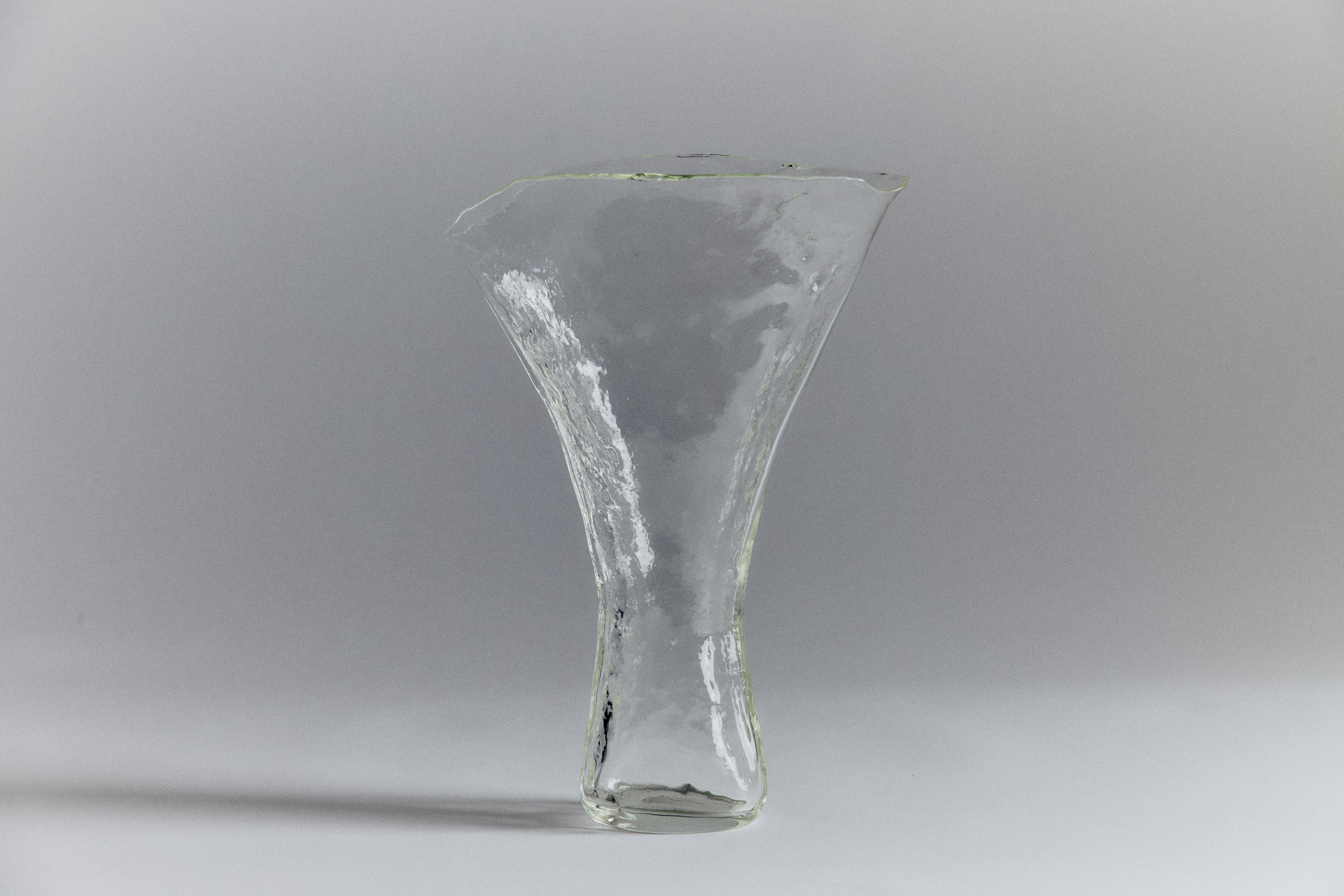
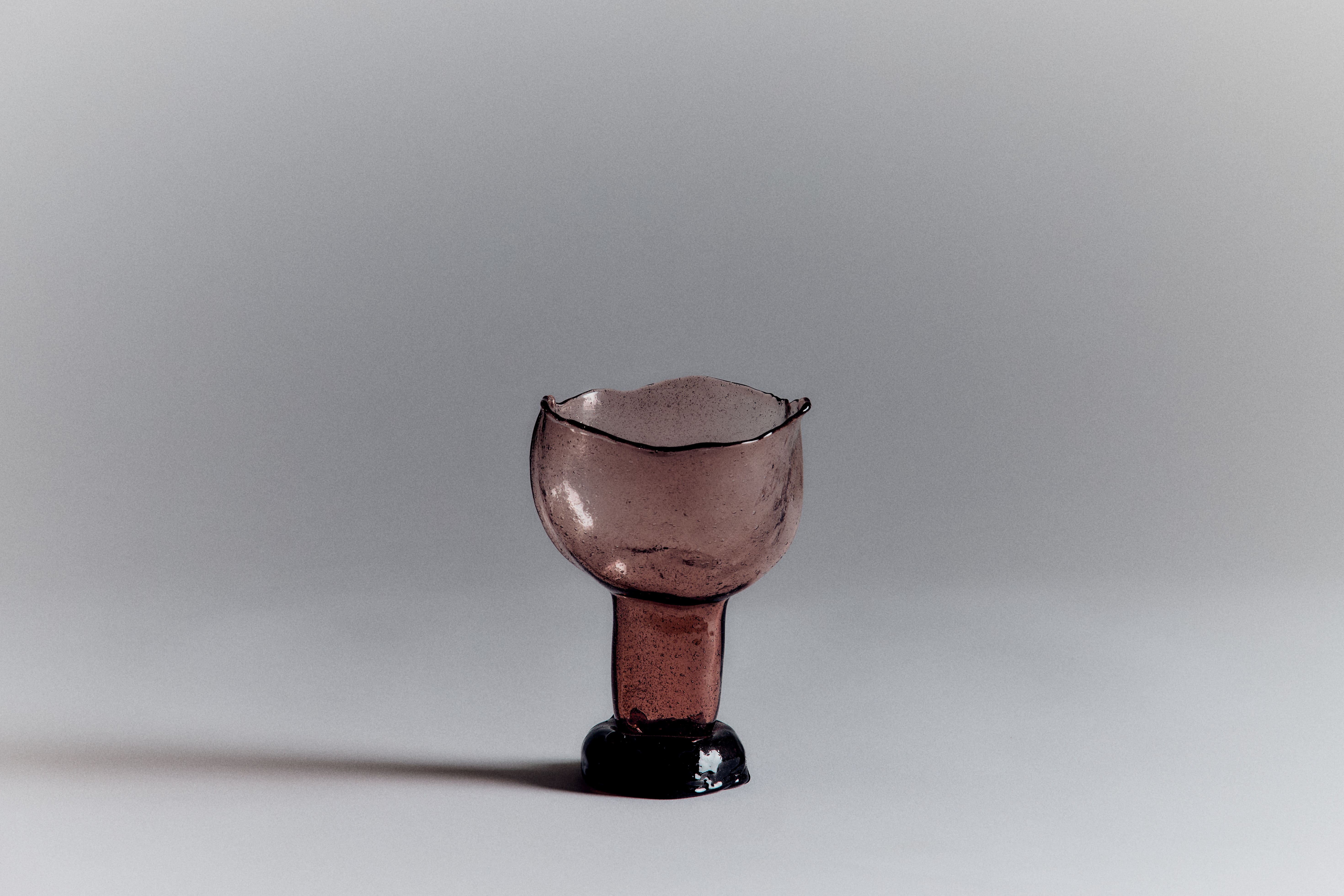
Sculptural works from my Speculative Future exhibition, or smaller functional sculptures from the Waldglas series, are particularly rewarding because they require a more intuitive response.
What’s next for you?
I’m continuing to develop sculptural and lighting work alongside the commercial direction of Studio Dokola.
There are a number of upcoming exhibitions tied to Melbourne Design Week, as well as an exhibition in Denmark as part of 3 Days of Design. Longer term, I’m interested in expanding into more collaborative and large-scale projects using the studio as a platform.
Is there anything else you’d like to add or highlight?
I’ll be sharing more of my process across April and May while undertaking a residency at Canberra Glassworks.
A key focus of that residency is working with rejected KeepCup glass, exploring how it can be reprocessed and reused within Studio Dokola’s public classes. Much of this work will feed directly into upcoming Melbourne Design Week exhibitions.
Victoria has been incredibly supportive of my practice — there’s a strong intersection here between craft, design and architecture, and a real appetite for engaging with material processes.
Photography - Eve Wilson
Selected products



.jpg)


Dokola is located on the traditional lands of the Wurundjeri/Woiwurrung people of the Kulin Nation. We pay our respects to Elders both past and present, and recognise and respect their leadership as custodians of this land and as historically important local material innovators and craftpeople.